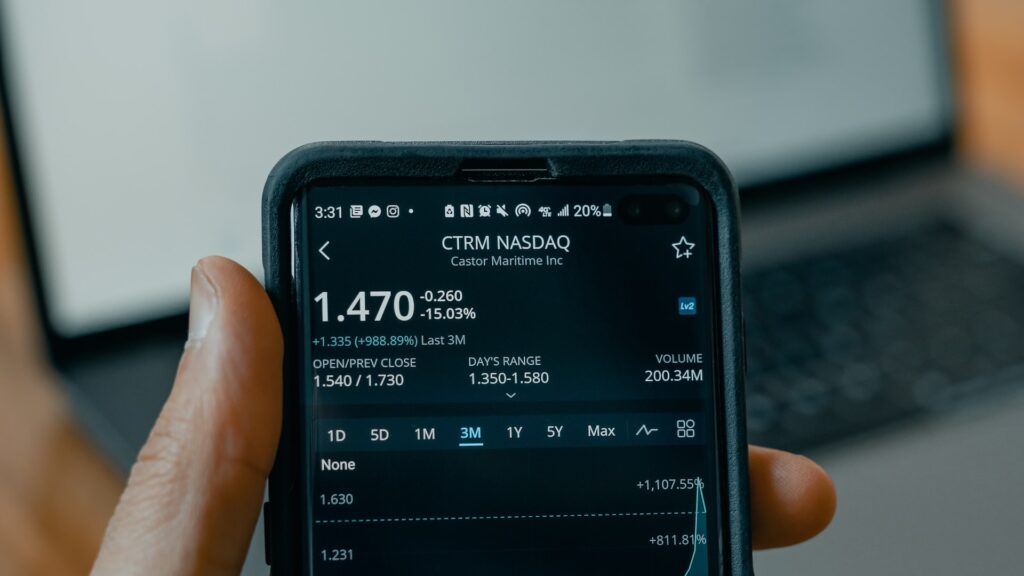
What is Forex Trading and How Can It Generate Profit?
Forex trading, also known as foreign exchange trading, is the process of buying and selling currencies with the aim of making a profit from the fluctuations in their exchange rates. It is the largest and most liquid market in the world, with trillions of dollars traded daily. In this blog post, we will explore what forex trading is and how it can generate profit for traders.
1. Understanding Forex Trading
Forex trading involves the simultaneous buying of one currency and selling of another. Currencies are traded in pairs, such as EUR/USD (Euro/US Dollar) or GBP/JPY (British Pound/Japanese Yen). Traders speculate on the future direction of exchange rates, aiming to profit from the changes in these rates.
The forex market operates 24 hours a day, five days a week, allowing traders to participate at any time. It is a decentralized market, meaning that trading takes place electronically over-the-counter (OTC), without a central exchange.
2. Factors Influencing Forex Markets
Several factors influence the forex market and the exchange rates of currencies. Understanding these factors is crucial for traders looking to generate profit. Some key factors include:
2.1. Economic Indicators
Economic indicators, such as GDP growth, inflation rates, and employment data, have a significant impact on currency values. Positive economic indicators often strengthen a currency, while negative indicators can weaken it.
2.2. Interest Rates
Central banks’ decisions on interest rates affect currency values. Higher interest rates typically attract foreign investors, increasing demand for the currency and potentially driving up its value.
2.3. Political Stability
Political stability or instability in a country can influence its currency’s value. Stable political environments often attract investors, while political uncertainty can lead to currency depreciation.
3. How Forex Trading Generates Profit
Forex trading can generate profit through various strategies, including:
3.1. Speculation on Currency Appreciation
Traders can buy a currency pair with the expectation that the base currency will appreciate against the quote currency. If the exchange rate increases as predicted, traders can sell the pair at a higher price to realize a profit.
3.2. Speculation on Currency Depreciation
Conversely, traders can also speculate on currency depreciation. By selling a currency pair, expecting the base currency to weaken against the quote currency, traders can buy back the pair at a lower price in the future, thus profiting from the decline in value.
3.3. Carry Trade Strategy
The carry trade strategy involves borrowing in a low-interest-rate currency and investing in a high-interest-rate currency. Traders earn profit from the interest rate differential between the two currencies while also potentially benefiting from exchange rate movements.
3.4. Technical Analysis
Technical analysis involves analyzing historical price data, charts, and indicators to identify patterns and trends. Traders who utilize technical analysis aim to predict future price movements based on historical patterns, thereby generating profit from these anticipated movements.
3.5. Fundamental Analysis
Fundamental analysis involves examining economic, political, and social factors that may impact currency values. Traders who use fundamental analysis analyze economic indicators, central bank policies, geopolitical events, and other factors to make trading decisions and generate profit.
Conclusion
Forex trading is a dynamic market that offers opportunities for traders to generate profit by capitalizing on currency fluctuations. By understanding the factors influencing forex markets, utilizing various trading strategies, such as speculation on currency appreciation or depreciation, employing carry trade strategies, and using technical and fundamental analysis, traders can aim to generate profit in the forex market.
However, it’s important to note that forex trading involves risks, and profit is not guaranteed. Traders should always practice proper risk management, continuously learn and improve their skills, and stay updated with market trends and news to increase their chances of success in forex trading.