Introduction
Open market forex, also known as the foreign exchange market, is a decentralized global marketplace where currencies are traded. It is the largest and most liquid financial market in the world, with participants ranging from individual traders to large financial institutions. In this blog post, we will explore the concept of open market forex and how it functions.
1. Understanding Forex Trading
Forex trading involves buying and selling currencies with the aim of making a profit from the fluctuations in their exchange rates. Currencies are traded in pairs, such as EUR/USD (Euro/US Dollar) or GBP/JPY (British Pound/Japanese Yen). Traders speculate on whether a currency will appreciate or depreciate against another currency, and they profit from correctly predicting these movements.
2. Market Structure
The forex market operates as an over-the-counter (OTC) market, meaning that there is no central exchange or physical location. Instead, trading is conducted electronically through a network of banks, financial institutions, and individual traders. The decentralized nature of the market allows for 24-hour trading, excluding weekends, as the market operates across different time zones.
3. Market Participants
The participants in the forex market can be categorized into three main groups:
3.1. Banks and Financial Institutions
Commercial banks, investment banks, and other financial institutions are the primary participants in the forex market. They engage in currency trading activities to facilitate international trade, manage foreign exchange risk, and speculate on currency price movements. These institutions account for a significant portion of the daily trading volume in the forex market.
3.2. Corporations and Businesses
Corporations and businesses that engage in international trade are active participants in the forex market. They use forex trading to convert their revenues from foreign currencies into their domestic currency or hedge against potential currency fluctuations that could impact their profitability. Additionally, multinational corporations may engage in speculative forex trading to take advantage of currency movements.
3.3. Individual Traders
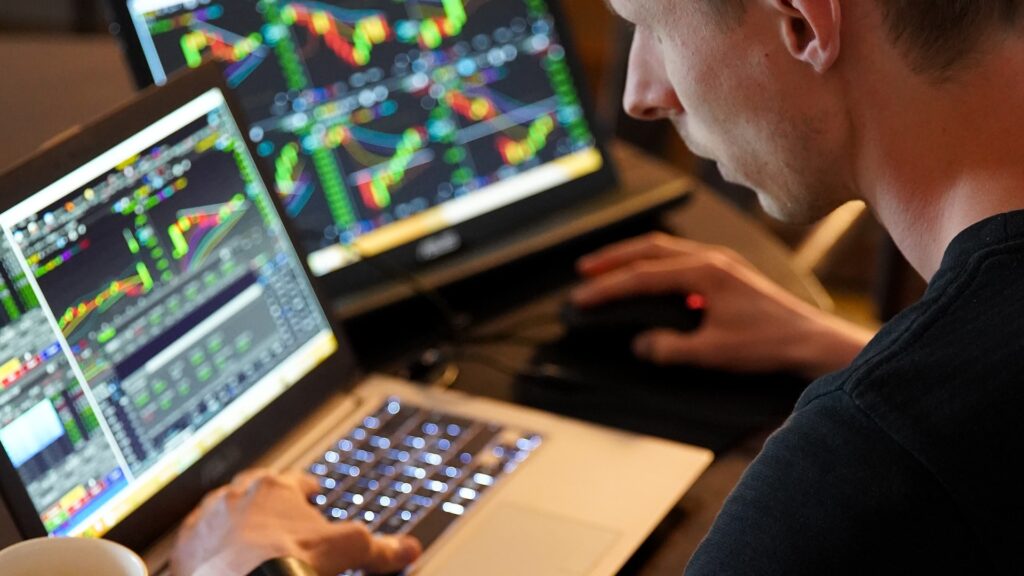
Individual traders, including retail traders, play a crucial role in the forex market. With the advancement of technology, retail forex trading has become increasingly accessible to individuals. Retail traders can participate in the forex market through online platforms offered by forex brokers. These platforms provide access to real-time market quotes, charts, and trading tools, allowing individuals to trade currencies from the comfort of their homes.
4. Factors Influencing Forex Prices
The forex market is influenced by a variety of factors that impact the supply and demand for currencies. Some key factors include:
4.1. Economic Indicators and News
Economic indicators, such as GDP growth, inflation rates, and employment data, can significantly affect currency prices. Positive economic news may lead to currency appreciation, while negative news can result in depreciation. Traders closely monitor economic indicators and news releases to identify potential trading opportunities.
4.2. Geopolitical Events
Geopolitical events, such as elections, political instability, and international conflicts, can create volatility in the forex market. Uncertainty surrounding these events can lead to significant price movements, as traders react to changing geopolitical landscapes.
4.3. Central Bank Policies
Central banks play a crucial role in the forex market through their monetary policy decisions. Interest rate changes, quantitative easing programs, and interventions in the foreign exchange market by central banks can have a substantial impact on currency prices. Traders closely monitor central bank announcements and statements to gauge potential market movements.
Conclusion
Open market forex is the largest and most liquid financial market globally, where currencies are traded. It operates as a decentralized market, allowing participants to engage in currency trading 24 hours a day. Market participants include banks, financial institutions, corporations, businesses, and individual traders. Various factors, such as economic indicators, geopolitical events, and central bank policies, influence currency prices in the forex market. Understanding the fundamentals of open market forex is crucial for anyone interested in participating in this dynamic and potentially profitable market.