How Can Moving Averages Help Identify Trends in Forex Trading?
Moving averages are popular technical indicators used in forex trading to identify trends and make informed trading decisions. They provide valuable insights into the market direction and can be a powerful tool for traders. In this article, we will explore how moving averages can help identify trends in forex trading.
1. Understanding Moving Averages
Before delving into their role in trend identification, let’s understand what moving averages are. Moving averages are calculated by taking the average price of a currency pair over a specified period of time. They smooth out price fluctuations and provide a visual representation of the average price movement.
2. Types of Moving Averages
There are different types of moving averages, but the most commonly used ones are the simple moving average (SMA) and the exponential moving average (EMA). The SMA calculates the average price over a specific period, while the EMA gives more weight to recent prices. Both types have their merits and can be used depending on the trader’s preference and trading strategy.
3. Identifying Trends with Moving Averages
Moving averages can help identify trends by highlighting the direction of price movement. Here’s how:
3.1. Determining the Overall Trend
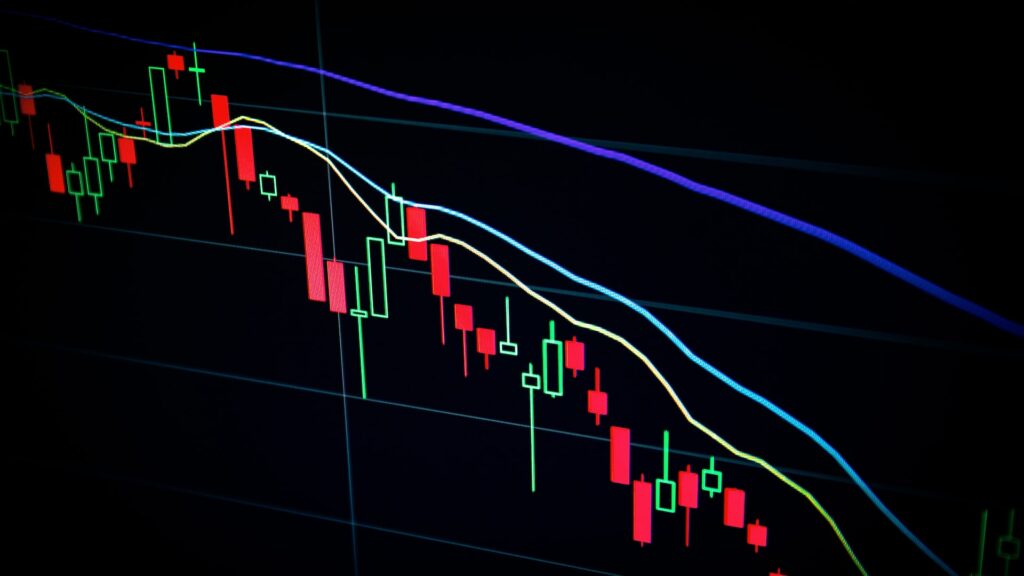
By plotting a moving average on a price chart, traders can assess the overall trend. When the price is consistently above the moving average, it suggests an uptrend, while a price below the moving average indicates a downtrend. Traders can use this information to align their trades with the prevailing trend.
3.2. Identifying Support and Resistance Levels
Moving averages can act as support or resistance levels. In an uptrend, the moving average can act as a support level, with prices often bouncing off it before continuing higher. In a downtrend, the moving average can act as a resistance level, with prices struggling to break above it. Traders can use these levels to enter or exit trades.
3.3. Recognizing Reversal Points
Moving averages can also help identify potential reversal points in a trend. When the price crosses above a moving average from below, it may signal a bullish reversal. Conversely, when the price crosses below a moving average from above, it may indicate a bearish reversal. Traders can use these crossovers as a signal to enter or exit trades.
4. Choosing the Right Moving Average Period
Selecting the appropriate period for a moving average is crucial. Shorter periods, such as 10 or 20, are more sensitive to price fluctuations and can provide early trend signals. Longer periods, such as 50 or 200, are more reliable but may lag behind price movements. Traders should experiment with different periods to find the one that best suits their trading style and the currency pair they are trading.
Conclusion
Moving averages are valuable tools for identifying trends in forex trading. They help determine the overall trend, identify support and resistance levels, and recognize potential reversal points. By incorporating moving averages into their analysis, traders can make more informed trading decisions and improve their chances of success in the forex market.